Sheung Wan Hong Kong Neighbourhood Walk
Sheung Wan, one MTR stop west of Central, trades glass towers for incense-filled temples, dried-seafood streets, and antique shops in converted tenement buildings.
- Flag
-

- ISO code
- HK
One MTR Stop West Changes Everything
The noise of Central does not fade gradually. It stops at the Sheung Wan boundary. Walk west from Central MTR for 12 to 15 minutes, or ride one stop on the Island Line. The glass towers retreat. The air fills with something else entirely: incense smoke from Man Mo Temple, the salt-and-umami blast of hundreds of dried seafood shops on Des Voeux Road West, and the quiet clink of ceramic in the antique shops climbing Hollywood Road. Sheung Wan is not Central with cheaper hotels. It is a different city, operating on a different logic, and the MTR fare to reach it is the same as any other single stop in Hong Kong.
The Sensory Threshold: Des Voeux Road West and Man Mo Temple
Walk the Dried Seafood Corridor
Exit Sheung Wan MTR from A2 and turn onto Des Voeux Road West. Between 09:00 and 18:00, roughly 200 shops pack this stretch with trays of dried abalone, scallop, sea cucumber, shark fin and fish maw. The smell registers on a subjective scale of 3 to 5 out of 5, rising with humidity and dropping as you climb to higher floors. June through August is the off season. Stock thins. The odour dials back. Walk this corridor by 10:00 on a Tuesday or Wednesday morning, when the trade is most active and the fewest tourists block your path. Open your mouth and you taste the sea.
Man Mo Temple Before the Crowds
At the corner of Hollywood Road and Ladder Street, Man Mo Temple sits unchanged since 1847. Push through the heavy wooden door. Incense coils suspended from the ceiling are thick enough to obscure the rafters. You are meant to breathe this. Arrive before 11:00 to experience the temple in semi-darkness, before the school groups land. No admission fee. No photography inside the main hall. Spend ten minutes. Not more. The temple is one concentrated note, not a full album.


Hollywood Road Antiques and the PoHo Coffee Circuit
Browse Without an Agenda
From Man Mo Temple, walk east along Hollywood Road toward Upper Lascar Row. The zone from Upper Lascar Row to Wyndham Street is the antique concentration. Shop owners here are less polished than their Central counterparts and more willing to haggle on cash deals. You are not buying investment-grade furniture. You are buying a porcelain plate with a chip in the rim for HKD 200, a wooden seal that might be 1920 or might be 1990, a brass lamp rewired badly. That is the appeal. The serious buyers go to Hollywood Road in Central. The curious ones stop in Sheung Wan.
PoHo: Coffee and Staircase Seating
Turn north at Po Hing Fong and you enter PoHo, a loose grid bounded by Tai Ping Shan Street, Square Street, Sai Street, and Po Hing Fong. About 30 independent shops occupy these converted tenement ground floors: coffee roasters, small-batch tea sellers, a shop selling only ceramic sake cups, a gallery that shows one artist at a time. The coffee is serious. Pull up a stool at a three-seat counter and order a filter from a roaster who can tell you the farm elevation in Yunnan. The geometry of the streets forces you to slow down. Narrow footpaths, staircases doubling as seating, no cars. This feels like a neighbourhood, not a district. Most bars and restaurants close by 23:00. After that, fewer than five late-night food options exist within 500 metres of exit A2. Night noise after 22:00 sits at 45 to 55 dBA, quieter than any equivalent block in Central or Wan Chai. If you want a 02:00 bowl of noodles, stay on the other side of the boundary.
Why Stay in Sheung Wan and How the Hotel Math Works
Take the Price Gap
Central commands a premium for its address. Sheung Wan charges less for the same grade of room. The 2024 rate gap between a three-star hotel in Sheung Wan and an equivalent three-star in Central was HKD 400 to 800 less per night, according to hotel booking data published annually by the Hong Kong Tourism Board. You trade the concierge who can get you into the members-only bar for a view of drying laundry and the sound of mahjong tiles from the lane below. Take the trade. You will spend your days walking anyway, and Central is fifteen minutes east.
The Macau Ferry Advantage
The Hong Kong Macau Ferry Terminal, inside Shun Tak Centre at 200 Connaught Road Central, sits on the Sheung Wan side of the boundary. TurboJET ferries leave every 15 to 30 minutes for Macau. Crossing time is 55 to 60 minutes. The one-way economy fare in 2024 ranged from HKD 160 to 200 depending on day of the week and departure time. You can walk from a Sheung Wan hotel to the ferry gates in under ten minutes. This is the single strongest practical reason to base yourself here: you can be in Macau eating a Portuguese egg tart before Central has finished its morning rush.
Know the Trade-Off
Sheung Wan is not convenient for everything. If your itinerary centres on Mong Kok night markets, Tsim Sha Tsui harbour views, or the hiking trails of the New Territories, you are adding ten to twenty minutes of MTR travel each way compared to a Tsim Sha Tsui base. That time adds up. Budget for it. The MTR is fast and reliable, but Hong Kong is a city of trade-offs. Sheung Wan trades absolute centrality for texture and price. Know which you prefer before you book.
The Physical Reality of This Neighbourhood
Dress for the Hill
Hong Kong is a vertical city and the humidity is a physical presence. Sheung Wan is not flat. Hollywood Road climbs steadily. The staircases between Queen's Road Central and Caine Road are not decorative. You will sweat through a shirt from October to December, the peak season when temperatures sit at 20 to 25 degrees with low humidity. You will sweat through two shirts from June to August when the heat hits 32 degrees and humidity hovers at 90 percent. Carry a spare. Drink water from the ubiquitous 7-Elevens. Use the shopping mall toilets; public ones are scarce. Accept that the physical toll of walking this neighbourhood for five hours is real, and it is part of why Sheung Wan feels different. Central smooths out the terrain with escalators and air-conditioned walkways. Sheung Wan leaves the hills in place. You earn the view.
Give It Half a Day
A common mistake is to treat Sheung Wan as a day-trip annex of Central. Do not walk through it on your way to the Peak. Do not use it as a lunch stop between the Mid-Levels escalator and the ferry. Dedicate at least half a day to the neighbourhood itself. Start at Man Mo Temple at 09:30. Walk Des Voeux Road West until the dried seafood smell settles into your clothes. Cut up through PoHo for coffee. Browse Hollywood Road without a shopping agenda. End at the Sun Yat Sen Memorial Park seawall as the light softens. That is the sequence. Anything less and you have seen the street names without feeling the texture.


| District | Nightly Rate (HKD) | Character | Late-Night Food Options After 23:00 |
|---|---|---|---|
| Sheung Wan | 800 to 1400 | Dried seafood, antiques, independent coffee, slower pace | Fewer than 5 within 500m of MTR exit A2 |
| Central | 1200 to 2200 | Glass towers, designer flagships, historic back alleys | Abundant, concentrated in Lan Kwai Fong and SoHo |
| Wan Chai | 900 to 1600 | Old wet markets rubbing against modern bars | Moderate, focused on Lockhart Road and Star Street |
Common Questions
How long does it take to walk from Sheung Wan MTR to Central MTR?
Twelve to fifteen minutes on foot at a normal pace. The MTR takes two minutes but adds time for stairs and platform access. Walking through the covered walkways along Queen's Road Central is the faster route during rain.
How much cheaper are hotels in Sheung Wan compared to Central?
The 2024 rate gap for a three-star hotel was HKD 400 to HKD 800 less per night, according to annual data published by the Hong Kong Tourism Board. Verify current rates directly with hotels, as pricing fluctuates with trade fair schedules and seasonal demand.
What are the best hours to see the dried seafood street on Des Voeux Road West?
Trade hours are 09:00 to 18:00. Arrive between 10:00 and 12:00 on a weekday for maximum activity and minimal tourist crowds. The off season runs from June to August, when stock levels are lower and the smell is less intense.
Where exactly is the PoHo area and how many shops are there?
PoHo is bounded by Tai Ping Shan Street, Square Street, Sai Street, and Po Hing Fong. It contains roughly 30 independent shops, primarily coffee roasters, tea sellers, galleries, and small design studios. It is a pedestrian-scale area, not a shopping mall.
Can I get food in Sheung Wan after midnight?
Fewer than five late-night food options exist within 500 metres of MTR exit A2 after 23:00. Most bars and restaurants close by 23:00. For late-night eating, take the MTR back to Central or Wan Chai.
How long does the Macau ferry take from Sheung Wan?
The TurboJET ferry from the Hong Kong Macau Ferry Terminal at Shun Tak Centre takes 55 to 60 minutes. Ferries run every 15 to 30 minutes. The one-way economy fare in 2024 was HKD 160 to 200 depending on day of the week and departure time.
When is the best time of year to visit Sheung Wan?
October to early December, when temperatures are 20 to 25 degrees Celsius and humidity is low. Avoid the first week of October (Golden Week) and Chinese New Year for crowds and inflated hotel prices. Avoid June to August if you struggle with 32-degree heat and 90 percent humidity.
Read next
-
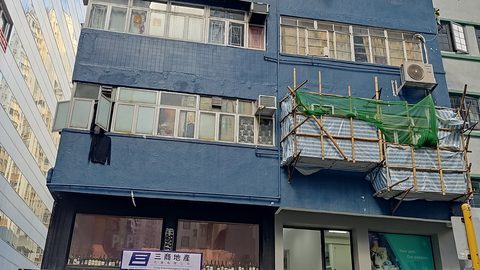 Staying in Sheung Wan One MTR Stop West and a Different City
Sheung Wan hotels trade Central's glass-tower energy for antique streets, dried seafood aromas, and a quieter night one MTR stop west.
Staying in Sheung Wan One MTR Stop West and a Different City
Sheung Wan hotels trade Central's glass-tower energy for antique streets, dried seafood aromas, and a quieter night one MTR stop west.
-
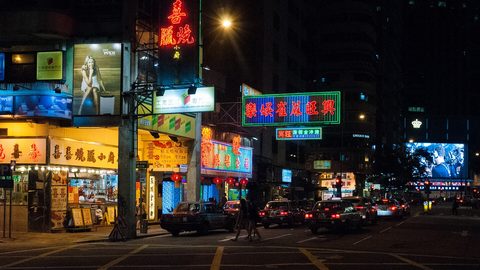 Hong Kong for a Short Stay The Harbour the Sides and the Seasons
Plan a Hong Kong short stay with the minimum four-day framework, covering harbour contrasts, a market, a hike, and the seasonal timing that makes or breaks a trip.
Hong Kong for a Short Stay The Harbour the Sides and the Seasons
Plan a Hong Kong short stay with the minimum four-day framework, covering harbour contrasts, a market, a hike, and the seasonal timing that makes or breaks a trip.
-
 Is a Hong Kong Harbour View Room Worth the Extra Money
Calculate the real cost difference for a Victoria Harbour view room in Hong Kong and decide when the premium is justified and when the Star Ferry does it better.
Is a Hong Kong Harbour View Room Worth the Extra Money
Calculate the real cost difference for a Victoria Harbour view room in Hong Kong and decide when the premium is justified and when the Star Ferry does it better.
-
 Hong Kong Island or Kowloon Hotel Why the Choice Matters Less Than You Think
The Island-or-Kowloon hotel decision matters less than the MTR makes it seem, except when a taxi driver refuses the cross-harbour trip at 4pm.
Hong Kong Island or Kowloon Hotel Why the Choice Matters Less Than You Think
The Island-or-Kowloon hotel decision matters less than the MTR makes it seem, except when a taxi driver refuses the cross-harbour trip at 4pm.
-
 Sleeping at HKG Airport Hotels Tung Chung and the Transit Options
Compare the airside Regal Airport Hotel at HKG, the Tung Chung cluster, and Airport Express corridor stays for late arrivals and early departures.
Sleeping at HKG Airport Hotels Tung Chung and the Transit Options
Compare the airside Regal Airport Hotel at HKG, the Tung Chung cluster, and Airport Express corridor stays for late arrivals and early departures.
-
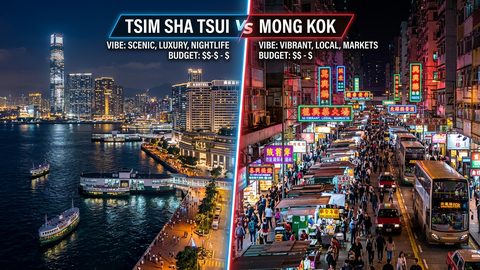 Tsim Sha Tsui vs Mong Kok — Choosing Your Kowloon Base by Budget and Vibe
TST or Mong Kok for your Kowloon base? Compare nightly rates, MTR exits, noise levels, and street vibe to pick the right fit for your Hong Kong trip.
Tsim Sha Tsui vs Mong Kok — Choosing Your Kowloon Base by Budget and Vibe
TST or Mong Kok for your Kowloon base? Compare nightly rates, MTR exits, noise levels, and street vibe to pick the right fit for your Hong Kong trip.