Sheung Wan Hotels Antique Streets Dried Seafood and Hip Coffee
Sheung Wan hotels trade Central's glass-tower energy for antique streets, dried seafood aromas, and a quieter night one MTR stop west.
Sheung Wan Hotels: Antique Streets, Dried Seafood and Hip Coffee
The wrong assumption is that a Hong Kong hotel should sit inside the glass-and-steel core of Central. The logic seems solid: you came for the vertical city, so why not sleep inside it? But Central after midnight is a corridor of closed luxury flagships and office-block wind tunnels. The nightlife in Lan Kwai Fong is forty metres down a steep hill from the MTR, not out your hotel door. What you actually want is a base where the street outside has texture, where you can walk out at 7am and smell dried fish maw and shrimp paste instead of exhaust, and where the third-wave coffee shop opens before your first meeting because the roaster lives upstairs. That is Sheung Wan.
One stop west on the Island Line, or a walk west along Des Voeux Road, Sheung Wan occupies roughly half a square kilometre between Jubilee Street and Western Street. The hotel stock is predominantly boutique and design properties, converted from old residential or commercial buildings. You will not find the Four Seasons or the Mandarin Oriental here. Those sit in Central because that is where the corporate rate lives. What you find in Sheung Wan are smaller rooms, fewer five-star amenities, and rates 20, 40% lower than a comparable room one stop east. The rate differential comes from distance from the Central business district and nightlife core, smaller average room size, and lower density of five-star inventory. That gap buys you genuine quiet after 22:00, a dried-seafood trade that still operates on Wing Lok Street and Des Voeux Road West, and antique dealers whose shops have been there since before the handover.
The trade-off is concrete. Fewer late-night dining and bar options within walking distance. The Macau ferry terminal is at Shun Tak Centre on Connaught Road, a short walk from Sheung Wan Station Exit D, which means every hour from 07:00 to 23:59 a TurboJET or Cotai Water Jet crossing is an option, but the departure hall is not a nightlife destination. If you need a cocktail at 1am, you walk or take the MTR east. That is the deal. The reader who wants to step out of the maelstrom accepts it.


How the Dried Seafood Streets Shape the Neighbourhood
Sheung Wan is not a museum. The dried seafood trade on Wing Lok Street, Ko Shing Street, Bonham Strand and Bonham Strand West is a working industry. Between April and September, when humidity and temperature peak, the smell is strong and pervasive. Dried fish maw, sea cucumber, abalone, shrimp paste, salted fish. The smell does not fade at night. It is in the pores of the buildings. Some visitors find it intolerable. Others find it the most honest thing about the district. If you book a room on a side street off Des Voeux Road West, the window that faces the block interior will be quieter than anything in Central after 10pm. The window that faces the main road and the tram line will carry the clatter of Hong Kong but not the neon roar.
The Tram And The Bus Hub
The tram route from Western Market to Shau Kei Wan runs along Des Voeux Road and passes right through the district. It costs HK$3 and runs slower than walking. Take it once to understand the old Hong Kong that the MTR erased. The Central (Macau Ferry) Bus Terminus at Shun Tak Centre feeds buses to the rest of the island and the cross-harbour routes. You are a short stroll from the walkway to the Peak Tram, a quick ride from the Star Ferry, and one stop from Central Station where you connect to the Tsuen Wan Line for Tsim Sha Tsui and Mong Kok.
Why Sheung Wan Works for the Visitor Who Plans Well
This neighbourhood suits a specific kind of trip. You are not on a shoestring budget but you are not burning hotel spend on a lobby you never sit in. You intend to arrive at Hong Kong International Airport, take the Airport Express to Central for HK$115 one-way, and transfer to the Island Line for a single stop west. You will buy a local SIM from 3HK or China Mobile at the airport 7-Eleven for around HK$88 for 7 days of unlimited data, because the free public Wi-Fi is slow and limited. You will download the MTR Mobile app and the HK Taxi app, because shift change at 4pm leaves you stranded if you rely on street hails.
What The Neighbourhood Does Not Give You
Less than 20% of the city's Michelin-starred restaurants are within a short walk of Sheung Wan. The best roast goose is in Wan Chai or Central. The best Typhoon Shelter Crab is in Causeway Bay. The best claypot rice is at Temple Street at the north end of the MTR line. You will travel for dinner. That is fine. The trade-off is that you return to a street where the only light at 11pm comes from a single 24-hour convenience store and a closed antique shop with a grille across the door.
When To Book
The peak season runs from October to early December, when clear skies and temperatures around 20, 25°C make the city walkable. This also coincides with major trade fairs that spike hotel prices. Book at least eight weeks ahead for October. Avoid the first week of October (Golden Week) and Chinese New Year in late January or February, when independent shops and restaurants close for days and crowds are extreme. June through August offers lower rates but 32°C heat with 90% humidity. The dried seafood smell peaks in those months. That is not a coincidence.

.jpg)
Getting the Macau Day Trip Right
Sheung Wan houses the Hong Kong, Macau Ferry Terminal at Shun Tak Centre, 202 Connaught Road, on Piers 3 and 4. The MTR exit is Sheung Wan Station Exit D. TurboJET and Cotai Water Jet run frequent ferries from 07:00 to 23:59. The crossing to Macau Outer Harbour takes about 55 minutes; to Taipa about 60. Economy class one-way in 2024 ran HKD 160, 200, with a night sailing surcharge. The operator publishes the rate schedule on their site; check before you go because the range is wide. Arrive at the terminal early for pier assignment. Do not buy a third-party ticket bundle. Buy direct from the operator counter.
The honest caveat: Sheung Wan is not a destination hotel district. It is a genre. You choose it because you want the smell of dried shrimp paste under your window instead of the hum of a Muji air purifier. You accept that the hotel room is smaller, the brand is unfamiliar, and the Macau ferry terminal is your most reliable piece of infrastructure. If that sounds like a compromise, stay in Central. If it sounds like a release valve, you have found your stop.
Common Questions
How do I get from Sheung Wan to Central by MTR?
Sheung Wan Station is on the Island Line. One stop east puts you at Central Station. The walk through the underground concourse takes a short while above ground. The MTR ride itself is brief.
Is the dried seafood smell in Sheung Wan unbearable?
It is strong and pervasive between April and September when heat and humidity are highest. The source is dried fish maw, sea cucumber, abalone, shrimp paste, and salted fish on Wing Lok Street, Ko Shing Street, Bonham Strand, and Bonham Strand West. Rooms facing side streets are significantly less affected than those facing the main dried-seafood corridors.
How much cheaper are Sheung Wan hotels compared to Central?
Sheung Wan hotel rates run roughly 20, 40% lower than equivalent rooms in Central. The reasons are distance from the Central business district and nightlife core, smaller average room size, and lower density of five-star inventory. Specific hotel prices fluctuate, but the differential is structural.
Can I walk from Sheung Wan to the Macau ferry terminal?
Yes. The Hong Kong, Macau Ferry Terminal is at Shun Tak Centre, 202 Connaught Road, Sheung Wan. Sheung Wan Station Exit D leads directly into the terminal. The walk from most Sheung Wan hotels is short.
Is Sheung Wan safe to walk at night?
Yes. Sheung Wan is significantly quieter than Central after 22:00 and has lower pedestrian traffic, but it is a safe district. The trade-off is that fewer late-night dining and bar options are within walking distance. Hotel rooms on side streets have reduced street noise.
Read next
-
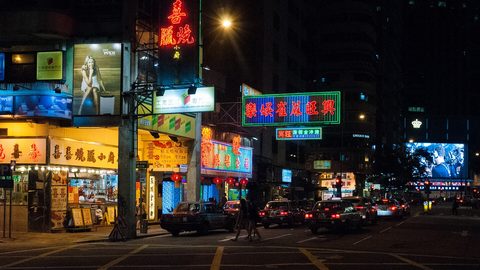
 Hong Kong for a Short Stay The Harbour the Sides and the Seasons
Plan a Hong Kong short stay with the minimum four-day framework, covering harbour contrasts, a market, a hike, and the seasonal timing that makes or breaks a trip.
Hong Kong for a Short Stay The Harbour the Sides and the Seasons
Plan a Hong Kong short stay with the minimum four-day framework, covering harbour contrasts, a market, a hike, and the seasonal timing that makes or breaks a trip.
-
 Is a Hong Kong Harbour View Room Worth the Extra Money
Calculate the real cost difference for a Victoria Harbour view room in Hong Kong and decide when the premium is justified and when the Star Ferry does it better.
Is a Hong Kong Harbour View Room Worth the Extra Money
Calculate the real cost difference for a Victoria Harbour view room in Hong Kong and decide when the premium is justified and when the Star Ferry does it better.
-
 Hong Kong Island or Kowloon Hotel Why the Choice Matters Less Than You Think
The Island-or-Kowloon hotel decision matters less than the MTR makes it seem, except when a taxi driver refuses the cross-harbour trip at 4pm.
Hong Kong Island or Kowloon Hotel Why the Choice Matters Less Than You Think
The Island-or-Kowloon hotel decision matters less than the MTR makes it seem, except when a taxi driver refuses the cross-harbour trip at 4pm.
-
 Sleeping at HKG Airport Hotels Tung Chung and the Transit Options
Compare the airside Regal Airport Hotel at HKG, the Tung Chung cluster, and Airport Express corridor stays for late arrivals and early departures.
Sleeping at HKG Airport Hotels Tung Chung and the Transit Options
Compare the airside Regal Airport Hotel at HKG, the Tung Chung cluster, and Airport Express corridor stays for late arrivals and early departures.
-
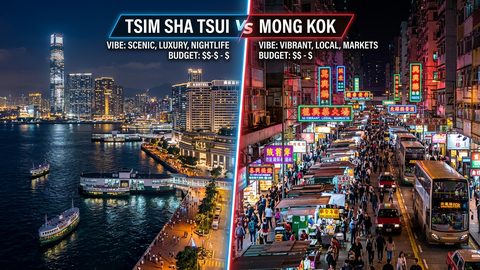 Tsim Sha Tsui vs Mong Kok — Choosing Your Kowloon Base by Budget and Vibe
TST or Mong Kok for your Kowloon base? Compare nightly rates, MTR exits, noise levels, and street vibe to pick the right fit for your Hong Kong trip.
Tsim Sha Tsui vs Mong Kok — Choosing Your Kowloon Base by Budget and Vibe
TST or Mong Kok for your Kowloon base? Compare nightly rates, MTR exits, noise levels, and street vibe to pick the right fit for your Hong Kong trip.