Kowloon Side Hotels and Streets
Kowloon gives you the classic harbour skyline view back at Hong Kong Island, with lower hotel prices and some of the city's rawest street life.
- Flag
-
- ISO code
- HK
- Currency
- HKD
- Timezone
- Asia/Hong_Kong
Kowloon Side Hotels and Streets
The View You Paid For
Most visitors land in Hong Kong and assume the island is the point. They book a room in Central or Admiralty, look out at the harbour, and wonder why the famous skyline seems to face the other way. The view they came for does not come from Hong Kong Island. It comes from Kowloon. That ribbon of neon across the water, the Peak rising behind it, the ferries cutting through the reflected lights. That is what you get when you stay on the Kowloon side. You also get a hotel bill that leaves you room for a claypot rice dinner and a night at the Temple Street stalls.
Kowloon is the grittier half. It is also the better value, the more honest version of the city. The Star Ferry crosses the harbour in six to ten minutes for HK$3.20 on a weekday upper deck. The MTR gets you from Tsim Sha Tsui to Central in five minutes for HK$10.30 on an Octopus card (2024 MTR Corporation fare table). The trade-off for that short commute is everything else. Kowloon packs its 46.9 square kilometres with 2,232,339 people (2021 Census and Statistics Department) and delivers a density that Hong Kong Island cannot match. Mong Kok alone sits at roughly 40,000 persons per square kilometre. The point of Kowloon is not that it is cheaper. The point is that the exchange gives you a front row seat to the city that actually functions, with the postcard view as a bonus.


Tsim Sha Tsui: the Polished Waterfront
The Harbourfront Ritual
Start at the Tsim Sha Tsui Star Ferry Pier. Arrive before 20:00 and walk the 440 metre Avenue of Stars. The hand-print tributes are less interesting than the railing. Stand there at 20:00 when the Symphony of Lights show runs. The show is a modest building-by-building laser and light sequence from the Hong Kong Island skyline. It lasts about ten minutes and it is free. Do not plan your evening around it. Plan to be on that waterfront anyway, and let it happen while you are there.
Where to Sleep and What to Skip
The 5 star hotels along the Tsim Sha Tsui harbourfront charge HK$1,200 to HK$2,500 a night in low season and HK$2,500 to HK$5,000 plus in peak season. These numbers are annual and were verified from published rate ranges. The premium for a harbour view room over a city view room runs 30 to 100 percent. Decide whether the sight of the ferries matters more than the quality of the sheets. If it does, book a harbour view and do not regret it. If it does not, a city view room in the same hotel puts the money saved toward a table at a roast goose specialist in Wan Chai.
Cutting Through the Peninsula
Kowloon Park sits at 13.3 hectares behind the hotel strip. Use it as a shortcut across the peninsula, not as a destination. The park connects Nathan Road to the waterfront and gives you a lungful of air before you re enter the corridor of shopping malls. Nathan Road itself runs 3.6 kilometres from Salisbury Road in Tsim Sha Tsui to Boundary Street in Mong Kok. Walk it once for the experience. Take the MTR for everything else.
Mong Kok: Neon Chaos That Works
The Streets That Do Not Sleep
Mong Kok is the argument for staying in Kowloon. Its population density of 40,000 persons per square kilometre means the streets do not sleep. Ladies Market on Tung Choi Street operates from roughly 12:00 to 23:00 daily. Temple Street Night Market runs from 16:00 to 23:00 daily. They are not the same thing. Ladies Market is T shirts and souvenirs sold by merchants who expect bargaining. Temple Street is fortune tellers, electric gadget stalls, and claypot rice cooked over charcoal. Go to Temple Street after dark and eat the claypot rice with lap cheong. The cured pork fat renders into the rice. That is winter eating in Kowloon.
The Morning Markets
Flower Market Road, Goldfish Market on Tung Choi Street north, the Jade Market on Kansu Street, and the Bird Garden on Yuen Po Street all operate within a 15 minute walk of each other. They are worth a morning if you want to see Hong Kong people buying things they actually use rather than things tourists buy. The Jade Market runs 09:00 to 18:00. The Bird Garden runs 07:00 to 20:00. Go early. The heat builds fast.
The Price of Proximity
Hotel rates in Mong Kok drop hard. A 3 star room runs HK$400 to HK$850 per night. A guesthouse or hostel runs HK$150 to HK$400. That is the floor for a Kowloon stay. The trade off is noise. The street level clamour does not stop until the morning delivery trucks start. Bring earplugs. You are paying for location, not silence.
Sham Shui Po: the Raw Counterpoint
Most visitors miss Sham Shui Po. They stay in Tsim Sha Tsui and Mong Kok and think they have seen Kowloon. They have not. Sham Shui Po is the gritty electronics bazaar, the fabric market alley, the street food that does not have a website. It is also where the common mistake of staying only in the tourist corridor becomes obvious. The raw, unpolished contrast that defines Hong Kong lives here.
Carry cash in small denominations. The dai pai dongs and older stalls do not take Octopus. The MTR Mobile app helps with routing, but the HK Taxi app helps more when the 16:00 shift change leaves yellow cabs refusing short trips. Do not expect a taxi from Sham Shui Po to Tsim Sha Tsui. Drivers know the fare is small and the traffic is heavy. Take the MTR instead. Jordan station is a 3 star hotel zone with rooms running HK$500 to HK$1,000 per night. Yau Ma Tei runs HK$450 to HK$900. Both put you near the night market action without the Mong Kok din.
What to Eat and Where
Pineapple bun with a slab of cold butter, bo lo yau, at a cha chaan teng. Egg waffles, gai daan ji, crisp shelled and custard centred from a Mong Kok street stall. Wonton noodles at Mak's Noodle. Roast goose with lacquered skin at a specialist in Central or Wan Chai. These are not optional. They are the itinerary. Budget for them the way you budget for the hotel.
Getting Around
The Airport Express reaches Central in 24 minutes for HK$115 one way. A taxi to Kowloon runs roughly HK$270. A taxi to Hong Kong Island runs roughly HK$350 with a luggage surcharge. The MTR covers the rest. Buy an Octopus card at the airport 7 Eleven. If your card was issued before 2017, upgrade it at a service centre before you try to tap in. Public toilets are scarce in Mong Kok and Sham Shui Po. Use the ones inside shopping malls. Many restaurants operate on a 10 minute turnover expectation during lunch. They will hand you the bill before you ask for it. That is normal. Pay and leave. The meal was always going to be fast.
Connectivity and Weather
Free public Wi Fi is limited and slow. A local SIM from 3HK or China Mobile with unlimited data costs roughly HK$88 for seven days. Pick it up at the airport 7 Eleven. The best weather runs October to early December. Clear skies, low humidity, temperatures around 20 to 25 degrees Celsius. Avoid the first week of October for Golden Week crowds, Chinese New Year for closures, and June to August if you cannot handle 32 degrees Celsius with 90 percent humidity. Four days is the minimum to cover Kowloon and Hong Kong Island contrasts, one market, one hike, and a day trip to an outer island. You will not do it in three without sprinting.


| Area | Type | Nightly Rate Range | Notes |
|---|---|---|---|
| Tsim Sha Tsui | 5 star harbour view | HK$1,200–HK$5,000+ | Low vs peak season. Harbour view premium 30–100%. |
| Tsim Sha Tsui | 5 star city view | HK$800–HK$2,500 | Same hotel, lower floor or non harbour side. |
| Jordan | 3 star | HK$500–HK$1,000 | Near night market. Balanced price and access. |
| Yau Ma Tei | 3 star | HK$450–HK$900 | Slightly quieter than Mong Kok. Temple Street nearby. |
| Mong Kok | 3 star | HK$400–HK$850 | Loud. Dense. Worth the noise. |
| Mong Kok | Guesthouse/hostel | HK$150–HK$400 | Bare bones. Shared bathroom. Location only. |
Places in Kowloon
-
 Jordan
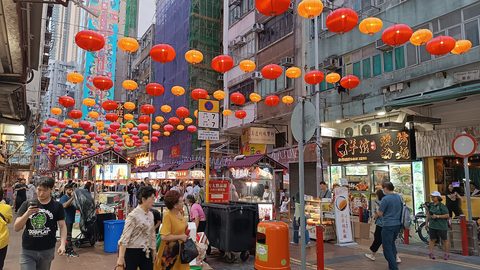
 and Yau Ma Tei offer Hong Kong's best compromise: central Kowloon beds near the MTR, Temple Street open past midnight, and street food that takes small cash.
Jordan
Jordan and Yau Ma Tei offer Hong Kong's best compromise: central Kowloon beds near the MTR, Temple Street open past midnight, and street food that takes small cash.
-
 Mong Kok
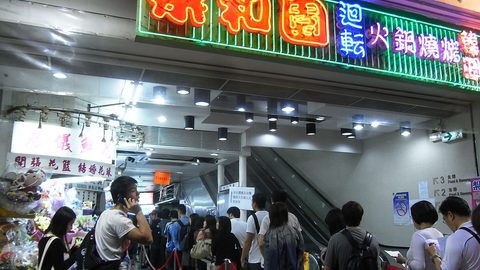
 trades space and silence for Hong Kong's cheapest central rooms and the densest concentration of street food, neon, and 3am congee spots on earth.
Mong Kok
Mong Kok trades space and silence for Hong Kong's cheapest central rooms and the densest concentration of street food, neon, and 3am congee spots on earth.
-
 Tsim Sha Tsui
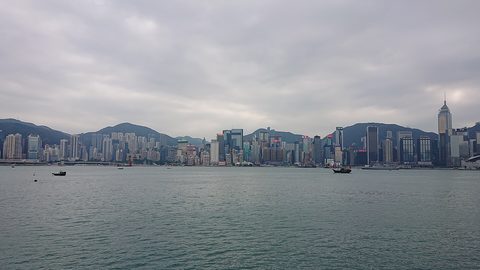
 splits into two worlds: the Salisbury Road harbour panorama and the dense Nathan Road retail corridor one block behind, each with a different price tag.
Tsim Sha Tsui
Tsim Sha Tsui splits into two worlds: the Salisbury Road harbour panorama and the dense Nathan Road retail corridor one block behind, each with a different price tag.
More destinations in Hong Kong
Common Questions
Why would I stay in Kowloon instead of Hong Kong Island?
You get the harbour skyline view from your side of the water instead of seeing the backs of the buildings. Your hotel costs less. The street life is denser and more honest. The Star Ferry crossing to Central takes six minutes and costs HK$3.20.
What is the cheapest way to stay in Kowloon?
Mong Kok guesthouses and hostels run HK$150 to HK$400 per night. A 3 star hotel in Mong Kok runs HK$400 to HK$850. Jordan and Yau Ma Tei sit in between. Book directly with the hotel for the best rates.
Is Kowloon safe for solo travellers?
Yes. Hong Kong is safe even at night in the crowded districts. Street crime is rare. The risk in Kowloon is pickpocketing in dense markets. Keep your wallet in a front pocket and your bag zipped. Women travelling alone face no added danger.
Which Kowloon neighbourhood should I skip?
Do not skip any of the three core districts. Tsim Sha Tsui gives you the harbour. Mong Kok gives you the neon. Sham Shui Po gives you the real city. Skipping Sham Shui Po is the most common mistake visitors make.
Read next
-
Jordan
Jordan and Yau Ma Tei offer Hong Kong's best compromise: central Kowloon beds near the MTR, Temple Street open past midnight, and street food that takes small cash.
-
Mong Kok
Mong Kok trades space and silence for Hong Kong's cheapest central rooms and the densest concentration of street food, neon, and 3am congee spots on earth.
-
Tsim Sha Tsui
Tsim Sha Tsui splits into two worlds: the Salisbury Road harbour panorama and the dense Nathan Road retail corridor one block behind, each with a different price tag.
-
 The Hong Kong Hotel Market and What Your Dollar Buys at Each Price Band
Hong Kong hotel prices span from subdivided guesthouses to five-star harbour-front towers, and what you get for each price band depends sharply on district, view, and square footage.
The Hong Kong Hotel Market and What Your Dollar Buys at Each Price Band
Hong Kong hotel prices span from subdivided guesthouses to five-star harbour-front towers, and what you get for each price band depends sharply on district, view, and square footage.
-
 Where to Stay in Hong Kong for First Timers Who Like Walking
Compare Hong Kong districts by noise, walkability, price, and MTR access to find the one that fits your travel style, not just the obvious picks.
Where to Stay in Hong Kong for First Timers Who Like Walking
Compare Hong Kong districts by noise, walkability, price, and MTR access to find the one that fits your travel style, not just the obvious picks.
-
 Hong Kong Flights and Getting from HKG Airport to Your Hotel
How to get from Hong Kong International Airport to your hotel district by Airport Express, taxi, or shuttle, with real fares and timing.
Hong Kong Flights and Getting from HKG Airport to Your Hotel
How to get from Hong Kong International Airport to your hotel district by Airport Express, taxi, or shuttle, with real fares and timing.
-
 Hong Kong Things to Do Walkable from Each Hotel District
What to do in Hong Kong organised by hotel district, so you know exactly what's walkable from your room and what needs a short MTR ride.
Hong Kong Things to Do Walkable from Each Hotel District
What to do in Hong Kong organised by hotel district, so you know exactly what's walkable from your room and what needs a short MTR ride.
-
 The Hong Kong Calendar Priced by Month and What It Costs Your Hotel
Hong Kong hotel prices swing dramatically by month: October trade fairs spike rates, Chinese New Year shuts shops, and summer humidity brings the deepest discounts.
The Hong Kong Calendar Priced by Month and What It Costs Your Hotel
Hong Kong hotel prices swing dramatically by month: October trade fairs spike rates, Chinese New Year shuts shops, and summer humidity brings the deepest discounts.
-
 The MTR Exit Number and Why It Decides Your Hong Kong Hotel
Hong Kong's MTR exit placement, cross-harbour taxi refusals, and Airport Express routing should all shape your hotel district choice before you book a single room.
The MTR Exit Number and Why It Decides Your Hong Kong Hotel
Hong Kong's MTR exit placement, cross-harbour taxi refusals, and Airport Express routing should all shape your hotel district choice before you book a single room.