Tsim Sha Tsui vs Mong Kok — Choosing Your Kowloon Base by Budget and Vibe
TST or Mong Kok for your Kowloon base? Compare nightly rates, MTR exits, noise levels, and street vibe to pick the right fit for your Hong Kong trip.
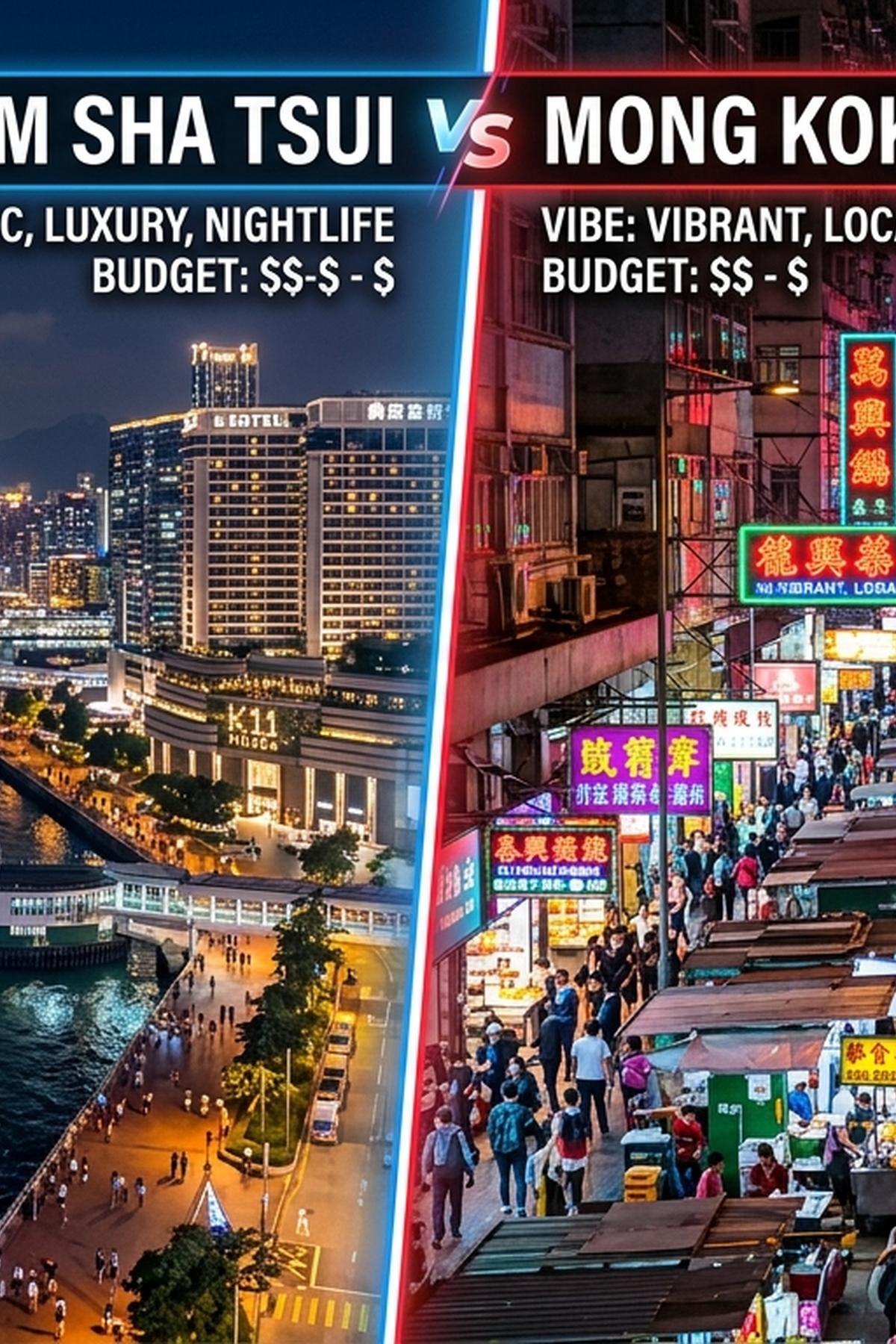
You've committed to Kowloon. Now comes the question that splits travelers cleanly down the middle: do you plant yourself in Tsim Sha Tsui with its harbour-front hotels and polished tourist corridors, or do you press further north into Mong Kok, where the neon stacks go up instead of sideways and the street energy never quite settles? If you're still weighing the broader question of which side of the harbour to sleep on, a thorough guide to where to stay Hong Kong covers the full Kowloon-versus-Island picture. For everyone already committed to the peninsula, this is the comparison that actually matters.
District at a Glance
- TST faces the harbour directly and packs more hotel options per block than anywhere else in Kowloon.
- Mong Kok runs 30 to 50 percent cheaper on average nightly rates, but trades views for street-level noise.
- Both districts sit on the Tsuen Wan Line, making cross-harbour trips and airport connections equally manageable from either base.
- TST draws the bulk of international visitors; Mong Kok moves at a local pace with little catering to tourist expectations.
- Sleep quality in Mong Kok depends heavily on floor height and room placement. In TST, it hinges on which side of the building you face.
Two Neighbourhoods, One Road Apart
Nathan Road connects them. On paper, Tsim Sha Tsui and Mong Kok are fewer than three MTR stops from each other. In practice, they feel like entirely different cities operating under different rules.
TST sits at the southern tip of Kowloon. It faces Victoria Harbour directly. The promenade, the Star Ferry piers, and the Cultural Centre are all within ten minutes on foot from most hotels. This is also the district that absorbed the largest share of Hong Kong's hotel construction over the past several decades. The result is a dense market of international chains, boutique properties, and business hotels competing hard on price and position. Streets around Haiphong Road and Granville Circuit are manageable. The Nathan Road corridor heading north toward Jordan gets louder and more chaotic.
Mong Kok begins roughly where Jordan ends. It is hyper-local in a way that TST traded away a long time ago. The produce stalls, the mahjong lounges, the stacked signage blocking out the sky above the pavement. This is the version of Hong Kong that matches the mental image most visitors arrive with. It is also relentlessly dense between 10am and well past midnight.
Nightly Rates and What Each Budget Gets You
TST skews pricier across all tiers. A recognisable mid-range brand in the district typically runs between HKD 1,200 and 2,500 per night, varying by season and floor level. Harbour-view rooms push those figures considerably higher. Budget guesthouses exist near the Jordan boundary, generally landing in the HKD 700 to 950 range, but they rarely include meaningful views or adequate soundproofing.
Mong Kok is cheaper across all tiers without exception. Guesthouse-style rooms on the upper floors of commercial buildings start around HKD 350 to 500. Mid-range hotels with proper reception areas and cleaner fitouts tend to fall between HKD 700 and 1,100. You are not paying for lobby design or harbour panoramas. You are paying for a bed inside one of the most densely occupied urban grids anywhere on the planet, which carries its own appeal if you came here for exactly that.
The honest tradeoff: the savings are real, but they show up in soundproofing quality. Budget rooms in Mong Kok absorb a significant amount of night noise at lower floors. Always request a higher floor when booking.
Getting Around: MTR Exits That Actually Matter
Both districts sit on the Tsuen Wan Line, which puts central Hong Kong Island roughly fifteen minutes away by train. The network's coverage and frequency make either district a fully functional base for city-wide movement. Before you arrive, the MTR system map lays out all connections and interchange points clearly.
In TST, Exit L from the main station is the one to memorise if your hotel sits near the waterfront or the Star Ferry terminal at Tsim Sha Tsui Pier. Exit B2 puts you along Nathan Road near Chungking Mansions and the mid-range hotel cluster. Exit E is the most direct option for the Salisbury Road corridor and properties near the Peninsula. East Tsim Sha Tsui is a separate station that connects to the East Rail Line, which is useful for trips toward Hung Hom, Kowloon Tong, and the border crossings into Shenzhen.
In Mong Kok, Exit D3 brings you up to Tung Choi Street near the Ladies' Market stretch. Exit E2 deposits you at Fa Yuen Street, known for sportswear and footwear shops and one of the more walkable corridors in the district. Exit C3 is the direct approach if your hotel sits near Langham Place. Mong Kok East, a separate stop on the East Rail Line, adds useful flexibility for day trips toward Sha Tin or the New Territories.
Noise and Crowd Density: The Real Atmosphere Test
TST carries significant tourist volume but distributes it across a wider footprint. The promenade along Salisbury Road fills up on weekend evenings but clears enough to breathe. The area near Kowloon Park and Haiphong Road runs noticeably quieter than the Nathan Road corridor. Hotels on the harbour-facing side of Salisbury Road benefit from that orientation in terms of sleep quality, since ambient sound comes from the water rather than the market lanes behind you.
Mong Kok operates at a different register of intensity. The crowds here are not primarily tourists. They are locals shopping, cooking, arguing, playing, and moving goods. The flower stalls on Flower Market Road, the goldfish tanks on Tung Choi Street, the electronics and appliance maze around Sai Yeung Choi Street South. Each block is running its own specific programme. It is exhilarating in short bursts and genuinely exhausting after a long-haul flight. Give yourself a day to adjust before you form opinions about it.
Practical Notes Worth Reading Before You Book
A few things that rarely appear in hotel listings but genuinely affect the experience:
- Mong Kok delivery trucks begin loading and unloading on side streets from around 6am. If you are a light sleeper, this matters more than anything the star rating tells you.
- TST harbour views are sold as a premium feature. Ground floors and low floors on street-facing sides give you neither the view nor the quiet. Confirm your floor and orientation before paying the upgrade.
- Both districts have guesthouses tucked into commercial towers. These can be perfectly adequate or genuinely grim. Recent photos from third-party booking platforms are more reliable than official listing images.
- Mong Kok is better for street food at low prices. TST offers a wider range of sit-down restaurants across price points, particularly around Knutsford Terrace and Granville Road.
- TST is closer to the cruise terminals at Ocean Terminal, which matters if you are arriving or departing by ship.
Matching the District to Your Travel Profile
Here is a practical way to settle the question based on what your trip actually needs:
- First-time visitors who want reliable hotel infrastructure and easy access to the main sights tend to do better in TST. The waterfront, the museums near the Cultural Centre, the Star Ferry crossing. It is all right there without requiring local knowledge to navigate the first morning.
- Budget-focused travelers who prioritise cost per night over polish should look at Mong Kok first. The savings are consistent and compound noticeably over a five-to-seven night stay.
- Business travelers with meetings in Kowloon Bay, Hung Hom, or along the East Rail corridor often prefer TST for the East Tsim Sha Tsui connection and the high concentration of functional business hotels within a small radius.
- Anyone coming specifically for Hong Kong's street-food and market culture will find Mong Kok pays off its noise tax. The immersion is genuine in a way that TST's curated shopping streets cannot replicate.
- Families traveling with young children generally appreciate TST's wider footpaths, the proximity to the Science and Space Museums, and the slightly less disorienting crowd patterns that Mong Kok generates during peak hours.
The Decision That Makes Your Kowloon Stay Work
This comparison always resolves around the same axis. TST gives you polish, harbour access, and a hotel market large enough to be genuinely competitive at the mid-range level. The cost is that you are sharing that space with a significant number of people doing the same things in the same sequence.
Mong Kok gives you a version of Kowloon that moves at its own pace with zero interest in performing for visitors. Prices are lower, the character is thick, and the MTR access is just as solid. The cost is real street noise and rooms that often look more appealing in listing photos than they feel in person after a long international flight.
Choose TST if you want a base that stays out of your way and lets the city come to you on your own terms. Choose Mong Kok if you want to be inside the city rather than observing it from a hotel window. Both districts work. Only one of them fits the way you actually travel.