Hong Kong in Four Days or More
Plan a Hong Kong short stay with the minimum four-day framework, covering harbour contrasts, a market, a hike, and the seasonal timing that makes or breaks a trip.
- Flag
-
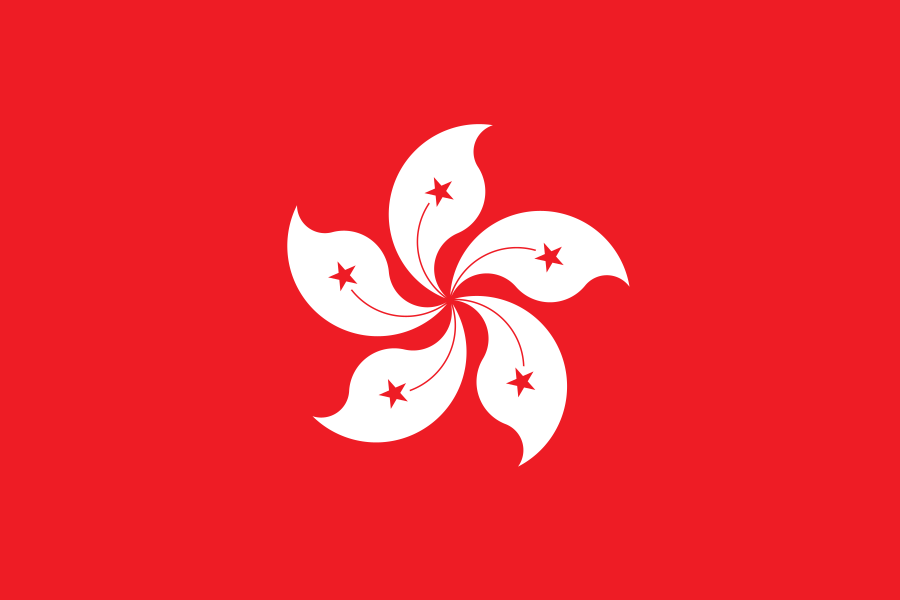
- ISO code
- HK
- Population
- 7,500,000
- Currency
- HKD
- Timezone
- Asia/Hong_Kong
- Dial code
- +852
Hong Kong in Four Days or More
You have four days. That is the minimum number of nights that makes Hong Kong worth the flight time and the jet lag. Anything shorter forces you to choose between Kowloon and Hong Kong Island when you need both, and between a hike and an outer island when you should do one of each. Four days covers the core contrasts: the neon grid of Mong Kok and the quiet of a Lantau fishing village, the Peak view and a cross-harbour ferry that costs HK$5.0. The city is dense, vertical, and relentless. The summer air hits like a wall in July. The stair climbing is constant and the noise rarely stops. But that density is the reason it works for a short trip. You cover more ground per hour here than in any other Asian megacity because everything stacks upward and the MTR runs trains every two minutes at peak.
Go between October and early December. That window gives you clear skies and temperatures between 20 and 25 degrees Celsius, with moisture levels dropping to 66 percent in autumn compared to the 86 percent ceiling of summer. The trade fair calendar spikes hotel rates in October, with the Hong Kong Electronics Fair pushing average room prices above HK$2,200, but you can book around it. Avoid the first week of October for Golden Week and the late January to February window for Chinese New Year, when independent shops and restaurants shut for days and crowds reach their peak. June to August is punishing for anyone who struggles with 32-degree heat and 90 percent saturation. Spring is tolerable but unpredictable. Winter is dry and cool but the harbour wind makes the upper deck of the Star Ferry cold after sunset. The sweet spot is a Tuesday arrival in November, when you get three full days before the weekend and the hotels have settled after the trade show surge.

- Minimum Recommended Stay: 4 days to cover Kowloon, Hong Kong Island, one market, one hike, and one outer island day trip
- Peak Season Weather: October to early December: 20-25°C, clear skies, low humidity
- Avoid These Windows: First week October (Golden Week crowds), Chinese New Year (shops closed), June-August (32°C+ and 90% humidity)
- Airport to City: Airport Express: 24 minutes to Central, HK$115. Taxi to Kowloon: ~HK$270; to HK Island: ~HK$350 plus luggage surcharge
- Key Transport Cost: Star Ferry upper deck: HK$5.0 weekday. MTR single: HK$4.5-60.5. Taxi flagfall: HK$27
- Total Land Area: 1,114 km² across Hong Kong Island (78.6 km²), Kowloon (46.9 km²), New Territories (978 km²), and 263 outlying islands
- Max MTR Travel Time: 75 minutes from Central to Lo Wu/Lok Ma Chau; cross-harbour by MTR: 3-8 minutes
- Peak Hotel Rate Context: Annual average room rate was HK$1,350 (2023 per Hong Kong Tourism Board); during major trade fairs rates hit HK$2,200-3,500+
How to Spend Four Days Without Regret
Land at Hong Kong International Airport. Buy a 7-day unlimited data SIM from 3HK or China Mobile at the airport 7-Eleven for roughly HK$88. Tap through the MTR gates with a contactless credit card or Apple Pay if your card supports it, or buy an Octopus card and top it up by at least HK$50. The Airport Express runs to Kowloon in 20 minutes and to Central in 24. Do not take a taxi unless you have heavy luggage. The fare to Hong Kong Island can reach HK$350 plus a surcharge per bag.
Your first night belongs to Tsim Sha Tsui. Walk the waterfront promenade at sunset. The Harbour City complex is adjacent and you can eat at a cha chaan teng for a pineapple bun with a slab of cold butter. The next morning cross to Central on the Star Ferry upper deck for HK$5.0. The crossing takes five minutes and the lower deck is cheaper at HK$4.0 but the upper deck gives a better view of the skyline as you approach.
Hong Kong Island and the Peak
Day one on Hong Kong Island: start in Sheung Wan for the dried seafood streets and Man Mo Temple, then walk east through Central and up to the Peak. Skip the Peak Tram. The queue exceeds 90 minutes at peak and the return ticket costs HK$88. Walk the Peak Circle Walk instead. It is a flat 3.5-kilometre loop with the same views and no queue. Descend into Wan Chai for roast goose at a specialist spot and a bar on the waterfront.
Kowloon Immersion
Day two belongs to Kowloon. Take the MTR from Central to Mong Kok in 12 minutes. Hit the Ladies Market in the afternoon for the spectacle, not the shopping. Eat an egg waffle from a street stall. Walk south through the neon grid to Tsim Sha Tsui.
Outer Island and the Hike
Day three is your outer island pick. Lantau Island gives you the Ngong Ping cable car to the Tian Tan Buddha and the fishing village of Tai O with stilt houses, all reachable in 31 minutes from Central to Tung Chung by MTR plus a 50-minute bus. Cheung Chau is 55 minutes by ferry from Central Pier and has no cars, just seafood and coastal walks. Day four is the hike. Dragon's Back ridge ends at Big Wave Bay beach and takes 30 minutes by bus 9 from Shau Kei Wan MTR.
If you have only three nights, drop the outer island and combine the Peak walk with a day that covers Sham Shui Po in the morning for the gritty electronics bazaar and street food, then Mong Kok in the afternoon. The raw contrast of a neighbourhood like Sham Shui Po against the glass towers of Central is exactly what makes the city worth the trip. Common mistake: staying only on Hong Kong Island and Tsim Sha Tsui. The New Territories hiking trails and the outer islands offer the unpolished side that defines Hong Kong.
The Season Windows: What Each Costs and Delivers
October and November are the clear winners. Autumn temperatures sit at 20 to 28 degrees Celsius, moisture drops to a mean of 66 to 75 percent, and the sky is usually clear. This is also the trade fair peak. The Hong Kong Tourism Board reported an 84 percent hotel occupancy rate for 2023 with an average room rate of HK$1,350. During October's Electronics Fair, rates climb to HK$2,200 to HK$3,500 or more. Book four months ahead if you are travelling in that window.
Winter: December to February
Temperature range: 14 to 20 degrees Celsius. Moisture: 69 to 77 percent. Dry, cool, and comfortable. Chinese New Year falls in late January or February and shuts many independent shops and restaurants for several days. Hotel rates spike during that specific week. Outside of that week, winter is the second-best window. Bring a jacket for the harbour wind.
Summer: June to August
Temperature range: 26 to 33 degrees Celsius. Saturation: 77 to 86 percent. The typhoon season peaks between July and September, with an average of five to six typhoons affecting Hong Kong per year. A T8 signal halts most transport and closes shops. June is the wettest month with a mean rainfall of 456 millimetres. If you are a hiker or a street food eater, skip summer. The heavy air drains you before lunch. Only come in summer if you are here for the indoor attractions: the Hong Kong Palace Museum, M+ Museum, and the shopping malls of Causeway Bay.
Spring: March to May
Temperature range: 18 to 26 degrees Celsius. Moisture: 77 to 87 percent. The March jewellery fair pushes hotel rates into the secondary spike bracket. Visibility is often poor. The city is workable but not ideal. If you must come in spring, aim for late April or early May when the air dries slightly and the trade fair crowd has thinned.
| Season | Temperature Range | Humidity (Mean) | Hotel Rate Context | Best For |
|---|---|---|---|---|
| Autumn (Oct Nov) | 20-28°C | 66-75% | Peak trade fair rates: HK$2,200-3,500+ in October | Hiking, harbour views, street food, clear sky photography |
| Winter (Dec Feb) | 14-20°C | 69-77% | Spike during Chinese New Year week; low elsewhere | Museum visits, Peak walks, outdoor dining |
| Spring (Mar May) | 18-26°C | 77-87% | Secondary trade fair spikes in March | Shopping, indoor attractions, late spring hiking |
| Summer (Jun Sep) | 26-33°C | 77-86% | Lower rates outside typhoon periods | Poolside, air conditioned malls, avoiding crowds |


.jpg)
Getting Around Without Stalling
The MTR
The MTR is your primary tool. Ten lines, 99 stations, and a daily ridership of roughly 4.7 million in 2023. Trains run from around 05:30 to 01:20 depending on the line, with headway as tight as two to three minutes on urban lines at peak. A single journey costs between HK$4.5 and HK$60.5 depending on distance. The Octopus card is the most efficient payment method, but contactless credit cards and Apple Pay work at specific gates. Note that Octopus cards issued before 2017 must be upgraded at a service centre before they work.
Taxis and Apps
Taxis are useful for short trips but drivers can refuse to cross the harbour if they do not want to pay the tunnel toll surcharge of HK$25 to HK$85. Never rely on a taxi for a harbour crossing when the MTR takes three to eight minutes. Download the HK Taxi app to avoid being stranded during the 4pm shift change when drivers head back to depots. Red urban taxis have a flagfall of HK$27. Budget for a surcharge per piece of luggage.
Practical Essentials
Free public Wi-Fi is limited and slow. A local SIM with unlimited data from 3HK or China Mobile costs roughly HK$88 for seven days. Download the MTR Mobile app for routing. Carry cash in small denominations for dai pai dongs and older minibuses that do not accept Octopus. Public toilets are scarce in dense shopping zones like Mong Kok; use the facilities inside shopping malls. Many restaurants impose a 10-minute turnover expectation during lunch peak and will hand you the bill without asking. That is normal. Pay and leave.
Regions & cities in Hong Kong
-
 Hong Kong Island
 runs from Central's glass towers to the southern beaches, with the tram connecting every neighbourhood in between.
Hong Kong Island
Hong Kong Island runs from Central's glass towers to the southern beaches, with the tram connecting every neighbourhood in between.
-
 Kowloon
 gives you the classic harbour skyline view back at Hong Kong Island, with lower hotel prices and some of the city's rawest street life.
Kowloon
Kowloon gives you the classic harbour skyline view back at Hong Kong Island, with lower hotel prices and some of the city's rawest street life.
-
 New Territories
The New Territories trade commute time for space, with Sai Kung's waterfront, Yuen Long's walled villages, and volcanic hiking routes far from the neon crush.
New Territories
The New Territories trade commute time for space, with Sai Kung's waterfront, Yuen Long's walled villages, and volcanic hiking routes far from the neon crush.
-
 Outlying Islands
Hong Kong's outlying islands range from Lantau's Big Buddha and Disneyland to the car-free seafood lanes of Cheung Chau, all reachable by ferry from Central Pier.
Outlying Islands
Hong Kong's outlying islands range from Lantau's Big Buddha and Disneyland to the car-free seafood lanes of Cheung Chau, all reachable by ferry from Central Pier.
More on Hong Kong
-
 What a Hong Kong Hotel Actually Costs by Season and Star Rating
Real Hong Kong hotel price ranges by star rating and season, from Golden Week spikes to summer slumps, with the harbour-view premium factored in.
What a Hong Kong Hotel Actually Costs by Season and Star Rating
Real Hong Kong hotel price ranges by star rating and season, from Golden Week spikes to summer slumps, with the harbour-view premium factored in.
-
 Is a Hong Kong Harbour View Room Worth the Extra Money
Calculate the real cost difference for a Victoria Harbour view room in Hong Kong and decide when the premium is justified and when the Star Ferry does it better.
Is a Hong Kong Harbour View Room Worth the Extra Money
Calculate the real cost difference for a Victoria Harbour view room in Hong Kong and decide when the premium is justified and when the Star Ferry does it better.
-
 Hong Kong Island or Kowloon Hotel Why the Choice Matters Less Than You Think
The Island-or-Kowloon hotel decision matters less than the MTR makes it seem, except when a taxi driver refuses the cross-harbour trip at 4pm.
Hong Kong Island or Kowloon Hotel Why the Choice Matters Less Than You Think
The Island-or-Kowloon hotel decision matters less than the MTR makes it seem, except when a taxi driver refuses the cross-harbour trip at 4pm.
-
 Sleeping at HKG Airport Hotels Tung Chung and the Transit Options
Compare the airside Regal Airport Hotel at HKG, the Tung Chung cluster, and Airport Express corridor stays for late arrivals and early departures.
Sleeping at HKG Airport Hotels Tung Chung and the Transit Options
Compare the airside Regal Airport Hotel at HKG, the Tung Chung cluster, and Airport Express corridor stays for late arrivals and early departures.
-
 Booking a Hong Kong Hotel Timing Cancellation and the Fine Print
Book a Hong Kong hotel at the right time by avoiding trade fair spikes, Chinese New Year shutdowns, and non-refundable typhoon-season gambles.
Booking a Hong Kong Hotel Timing Cancellation and the Fine Print
Book a Hong Kong hotel at the right time by avoiding trade fair spikes, Chinese New Year shutdowns, and non-refundable typhoon-season gambles.
-
 What HK$4,000 a Night Actually Buys in Hong Kong Luxury Hotels
A HK$4,000 nightly rate in Hong Kong buys a private harbour panorama, a floor butler who remembers your tea temperature, and a pool deck suspended above the skyline.
What HK$4,000 a Night Actually Buys in Hong Kong Luxury Hotels
A HK$4,000 nightly rate in Hong Kong buys a private harbour panorama, a floor butler who remembers your tea temperature, and a pool deck suspended above the skyline.
-
 Chungking Mansions to Guesthouses Under HK$500 in Hong Kong
A sub-HK$500 guesthouse in Chungking Mansions or Mong Kok means a subdivided room the size of a parking space, a shared toilet down a fluorescent-lit corridor, and a nightly gamble on peace.
Chungking Mansions to Guesthouses Under HK$500 in Hong Kong
A sub-HK$500 guesthouse in Chungking Mansions or Mong Kok means a subdivided room the size of a parking space, a shared toilet down a fluorescent-lit corridor, and a nightly gamble on peace.
-
 When a Week or More in Hong Kong Makes a Serviced Apartment Pay
A serviced apartment in Wan Chai or Kennedy Town flips the cost equation at seven nights, giving you a washing machine, a kitchenette, and twice the floor space of a hotel.
When a Week or More in Hong Kong Makes a Serviced Apartment Pay
A serviced apartment in Wan Chai or Kennedy Town flips the cost equation at seven nights, giving you a washing machine, a kitchenette, and twice the floor space of a hotel.
-
 Hong Kong Hotels for Families and the Disneyland Question
A Hong Kong family trip works best as a split stay: two nights at a Disneyland hotel for the magic, then three in Kowloon for the dim sum, the Star Ferry, and a genuine swimming pool.
Hong Kong Hotels for Families and the Disneyland Question
A Hong Kong family trip works best as a split stay: two nights at a Disneyland hotel for the magic, then three in Kowloon for the dim sum, the Star Ferry, and a genuine swimming pool.
-
 How to Verify a Hong Kong Hotel Is Genuinely Near an MTR Exit
A hotel marked 200 metres from an MTR exit on a map can be a 12-minute sweat-soaked trudge; verify the exact exit letter and the route on Street View before you book.
How to Verify a Hong Kong Hotel Is Genuinely Near an MTR Exit
A hotel marked 200 metres from an MTR exit on a map can be a 12-minute sweat-soaked trudge; verify the exact exit letter and the route on Street View before you book.
-
 Signal 8 What Happens to Your Hong Kong Hotel Booking and Flight
When a Signal 8 typhoon warning halts Hong Kong, your hotel becomes a mandatory shelter, the Airport Express may stop, and your non-refundable booking is not automatically refunded.
Signal 8 What Happens to Your Hong Kong Hotel Booking and Flight
When a Signal 8 typhoon warning halts Hong Kong, your hotel becomes a mandatory shelter, the Airport Express may stop, and your non-refundable booking is not automatically refunded.
-
 Kowloon Side or Island Side The Room the View and the Price
A HK$2,500 room on the Kowloon side buys a full harbour panorama and more floor space; the same money on Hong Kong Island buys proximity to the Peak Tram and a view of a back alley.
Kowloon Side or Island Side The Room the View and the Price
A HK$2,500 room on the Kowloon side buys a full harbour panorama and more floor space; the same money on Hong Kong Island buys proximity to the Peak Tram and a view of a back alley.
-
 Hotel or Short Term Rental in Hong Kong the Legal Position First
Most entire-home Airbnb listings in Hong Kong are unlicensed and illegal; a licensed Chungking Mansions guesthouse offers a legal door lock and a tourist recourse that a vanished host cannot.
Hotel or Short Term Rental in Hong Kong the Legal Position First
Most entire-home Airbnb listings in Hong Kong are unlicensed and illegal; a licensed Chungking Mansions guesthouse offers a legal door lock and a tourist recourse that a vanished host cannot.
Common Questions
Is four days really enough, or should I skip Hong Kong if I have less time?
Three days works if you accept you will miss an outer island or a hike. Two days is too short. You lose the contrast between Kowloon and the outlying islands that makes the city distinct. Four days is the floor for a meaningful visit.
Which month is the worst for a short stay?
August. 33-degree heat, 86 percent saturation, peak typhoon season, and the wettest month is June but August combines all three discomforts. Chinese New Year week in late January or February is the second worst because shops close.
Can I use my credit card everywhere?
No. Many street stalls, dai pai dongs, and older minibuses accept cash only. Octopus cards cover most transit and some convenience stores. Contactless credit cards work at MTR gates marked with the logo. Carry cash in small denominations.
Should I prepay for attractions before I arrive?
Yes for the Hong Kong Palace Museum, M+ Museum, and Hong Kong Disneyland. Advance booking is advised for all three. The Peak Tram does not benefit from prepaying because the queue is the same. Skip the tram entirely and walk the Peak Circle Walk.
Read next
-
 The Hong Kong Hotel Market and What Your Dollar Buys at Each Price Band
Hong Kong hotel prices span from subdivided guesthouses to five-star harbour-front towers, and what you get for each price band depends sharply on district, view, and square footage.
The Hong Kong Hotel Market and What Your Dollar Buys at Each Price Band
Hong Kong hotel prices span from subdivided guesthouses to five-star harbour-front towers, and what you get for each price band depends sharply on district, view, and square footage.
-
 Where to Stay in Hong Kong for First Timers Who Like Walking
Compare Hong Kong districts by noise, walkability, price, and MTR access to find the one that fits your travel style, not just the obvious picks.
Where to Stay in Hong Kong for First Timers Who Like Walking
Compare Hong Kong districts by noise, walkability, price, and MTR access to find the one that fits your travel style, not just the obvious picks.
-
 Hong Kong Flights and Getting from HKG Airport to Your Hotel
How to get from Hong Kong International Airport to your hotel district by Airport Express, taxi, or shuttle, with real fares and timing.
Hong Kong Flights and Getting from HKG Airport to Your Hotel
How to get from Hong Kong International Airport to your hotel district by Airport Express, taxi, or shuttle, with real fares and timing.
-
 Hong Kong Things to Do Walkable from Each Hotel District
What to do in Hong Kong organised by hotel district, so you know exactly what's walkable from your room and what needs a short MTR ride.
Hong Kong Things to Do Walkable from Each Hotel District
What to do in Hong Kong organised by hotel district, so you know exactly what's walkable from your room and what needs a short MTR ride.
-
 The Hong Kong Calendar Priced by Month and What It Costs Your Hotel
Hong Kong hotel prices swing dramatically by month: October trade fairs spike rates, Chinese New Year shuts shops, and summer humidity brings the deepest discounts.
The Hong Kong Calendar Priced by Month and What It Costs Your Hotel
Hong Kong hotel prices swing dramatically by month: October trade fairs spike rates, Chinese New Year shuts shops, and summer humidity brings the deepest discounts.
-
 The MTR Exit Number and Why It Decides Your Hong Kong Hotel
Hong Kong's MTR exit placement, cross-harbour taxi refusals, and Airport Express routing should all shape your hotel district choice before you book a single room.
The MTR Exit Number and Why It Decides Your Hong Kong Hotel
Hong Kong's MTR exit placement, cross-harbour taxi refusals, and Airport Express routing should all shape your hotel district choice before you book a single room.
-
Hong Kong Island
Hong Kong Island runs from Central's glass towers to the southern beaches, with the tram connecting every neighbourhood in between.
-
Outlying Islands
Hong Kong's outlying islands range from Lantau's Big Buddha and Disneyland to the car-free seafood lanes of Cheung Chau, all reachable by ferry from Central Pier.
-
New Territories
The New Territories trade commute time for space, with Sai Kung's waterfront, Yuen Long's walled villages, and volcanic hiking routes far from the neon crush.