Staying in Jordan and Yau Ma Tei, Where the Budget Stretches and the MTR Still Works
Jordan and Yau Ma Tei hotels deliver Kowloon's lowest central rates with Temple Street Night Market at the doorstep, but expect compact rooms and check for a licensed front desk.
Two Minutes from the MTR, Half the Price of Tsim Sha Tsui
The lift smells of cooking oil and incense. The hallway you step into is barely wide enough for two people to pass. That is the entrance to your hotel in Jordan or Yau Ma Tei, and it is the reason your room costs HK$400 a night instead of HK$1,000. You are three minutes by train from the Tsim Sha Tsui waterfront, but the rate gap for a comparable room runs 30 to 50 percent, according to annual pricing surveys. The trade-off is straightforward: you swap square metres and a marble lobby for immediate access to Kowloon's most kinetic street life. If you can sleep in a room smaller than your bedroom at home, and if you value what is outside the window over what is inside it, this stretch delivers the best value on the Kowloon Peninsula.
What Cheap Actually Looks Like in Jordan and Yau Ma Tei
Room Sizes and Property Types
Cheap here means a room between 8 and 18 square metres. In Jordan, the dominant stock is guesthouses, subdivided from residential or commercial units into four to twelve rooms per floor. Some are licensed through the Home Affairs Department Office of the Licensing Authority; an unknown number operate without one. In Yau Ma Tei, the mix tilts toward budget hotels and subdivided floor operations, with rooms stretching to 10 to 18 square metres. Either way, the space you get is about half what you would find in a Tsim Sha Tsui three star, where the average room runs 18 to 28 square metres.
What the Premises Feel Like
The structure will share a lift with other guesthouses, some of which look like the lodging floors of Chungking Mansions. The lobby, if there is one, is a desk and a security camera. The upside: you are paying HK$400 to HK$800 a night for a room with a private bathroom. That is not a given at the very bottom of Hong Kong's accommodation market. The downside: if you bring two large suitcases, you will be stepping over them to reach the bed. Families with children, anyone with mobility issues, or travellers who need a desk to work should skip this area entirely and budget for Tsim Sha Tsui or Jordan's handful of mid range chain hotels. Those sit at the high end of the HK$400 to HK$800 band and offer 18 square metres or more.


The Best Reasons to Stay Here: Temple Street and the Fruit Market
Temple Street Night Market
The one amenity that justifies the tight quarters is Temple Street Night Market, operating daily from 16:00 to 23:00, with peak activity from 19:00 to 22:00. From Jordan MTR exits A or C, you are a one to three minute walk to the stalls: fortune tellers, street food, knock off goods, and the smell of charcoal grilled squid. If you book a guesthouse on the market side of Nathan Road, expect noise levels of 65 to 75 decibels during peak hours. That is loud enough to disturb light sleepers. Pack earplugs or request a room facing away from the market.
Yau Ma Tei Fruit Market
The other landmark unique to this district is the Yau Ma Tei Fruit Market at 202 Reclamation Street, a Grade II historic structure designated in 2009. Its wholesale operations run from 04:00 to 13:00 daily, with peak activity from 04:00 to 08:00. If you are awake at dawn, walk through the open sided loading bays while crates of mangoes and durians stack three metres high. By midday the steel shutters come down and the street goes quiet. The neighbourhood turns back into a standard urban grid of cha chaan tengs and electronics stalls. That is the rhythm here: intense activity in concentrated windows, then stillness.
Getting to the Rest of Hong Kong
Jordan MTR to Tsim Sha Tsui is three minutes, HK$5.00 on Octopus at 2026 rates published by the MTR Corporation. Yau Ma Tei to Tsim Sha Tsui is four minutes, same fare. You can reach Central in under ten minutes by switching at Admiralty. The Airport Express to Kowloon station costs HK$115 one way and runs every ten minutes. A taxi from the airport to Jordan runs roughly HK$270. Avoid arriving from 16:00 to 18:00, when the cross harbour tunnel backs up and the fare climbs. For getting around the district itself, walk. The grid from Nathan Road to the harbourfront is compact, and short taxi rides to Mong Kok are often refused by drivers who do not want the fare.
Mid Range Chains Are the Safe Bet
The licensed hotel stock in Jordan and Yau Ma Tei numbers over 200 properties across the two MTR catchments, but the gap separating a reliable three star from an unlicensed guesthouse showing a fake online photo catalogue is vast. The safest option in this zone is a mid range chain that has opened here, attracted by the same demand that pulls budget travellers. These properties sit at the top of the HK$400 to HK$800 band, offer rooms from 15 to 18 square metres, and operate with a front desk that is open around the clock. They do not share a lift with four other guesthouses. The downside is that even these hotels sit on narrow commercial streets where delivery trucks idle at 06:00. Ask for a room above the fifth floor and facing away from the main road.
How to Vet a Listing
Avoid any property that does not show its exterior in photos. If the listing says "guesthouse" and the address is a commercial block on Nathan Road, search for the block name plus the word "guesthouse" to see complaints. Do not book a serviced apartment unless you are staying 28 nights or more, because that is the minimum stay, and short term booking platforms listing them as hotels are operating outside the licensing rules.
Staying at the Cheap End: What You Give Up
You give up space. A Tsim Sha Tsui three star gives you room to open both suitcases flat on the floor. In Jordan, you will open one bag on the bed and one in the narrow gap beside the wall. You give up quiet. The walls in subdivided guesthouses transmit conversations from the next room. You give up certainty. The unlicensed operations here have no minimum room size standard, only ventilation and light requirements under the licensing authority. A room that looks spacious in a photo may be a wide angle lens trick. And you give up the sense that you are in a hotel. You are in a residential block where tourists and permanent tenants share the lift. If that sounds acceptable, stay here. If it sounds like a compromise you would resent, move one stop south to Tsim Sha Tsui or stretch your budget to a three star in Mong Kok. The density there is similar but the room stock skews newer and slightly larger.


Who This Corridor Serves and Who it Does Not
This part of Kowloon suits the solo traveller who will eat four meals a day from street stalls, the couple who packs light and spends most waking hours outside the room, the budget conscious visitor who wants the MTR at the door and Temple Street three minutes away. It does not suit families with two children who need two beds and space to spread toys on the floor. It does not suit anyone who plans to work from the hotel. It does not suit travellers who arrive with two large suitcases and no plan to unpack them. The area is the value bet for those who treat the hotel as a base and the street as the destination. If you want the destination to include the hotel lobby, stay in Tsim Sha Tsui and pay the difference.
Common Questions
Is it safe to stay in a Jordan or Yau Ma Tei guesthouse?
The district is safe in the sense that Kowloon is safe. Petty theft is the main concern, not violent crime. Use the room safe for passports and cash. The licensing risk is that some guesthouses operate without a valid licence from the Home Affairs Department. These properties have no fire safety inspection, no minimum ventilation standard, and no recourse if the room is not as advertised. Book only from recognised booking platforms that verify the licence number, and filter for properties with 100 or more reviews.
How much cheaper is Jordan and Yau Ma Tei than Tsim Sha Tsui?
Annual price surveys show a gap of 30 to 50 percent for a comparable room. A three star hotel that costs HK$800 to HK$1,600 in Tsim Sha Tsui runs HK$400 to HK$800 in Jordan or Yau Ma Tei. The gap narrows during peak season in October to December, when trade fairs spike demand across all of Kowloon.
Can I walk from Jordan to Temple Street Night Market?
Yes. From Jordan MTR exits A or C, the market is a one to three minute walk. The market operates daily from 16:00 to 23:00. Peak activity runs from 19:00 to 22:00.
Is the Yau Ma Tei Fruit Market worth waking up for?
If you are a photographer, a food writer, or someone who enjoys industrial scale commerce in a Grade II listed structure, arrive at 05:00. The wholesale action peaks from 04:00 to 08:00. By 13:00 the shutters are down. It is a 20 minute walk through narrow streets and a distinct smell of ripening fruit. It is not a tourist attraction. It is a working market.
How noisy are the rooms near the market?
Guesthouses facing Temple Street record noise levels of 65 to 75 decibels during peak market hours. That is loud enough to wake a light sleeper. Request a room on the upper floor facing away from Nathan Road or the market. Bring earplugs.
Do Jordan and Yau Ma Tei hotels have private bathrooms?
Every licensed hotel and most guesthouses in this area offer a private bathroom. Shared bathroom properties are rare and concentrated at the very low end of the unlicensed market. If a listing does not explicitly state private bathroom, assume it is shared and move on.
What is the difference between a Jordan guesthouse and a Yau Ma Tei hotel?
A guesthouse is one subdivided floor of a residential or commercial block, with four to twelve rooms. A hotel occupies a full structure or multiple floors above a commercial ground floor. Hotels in Yau Ma Tei are slightly more likely to have a dedicated front desk, a lift that serves only that property, and rooms closer to 18 square metres. The price overlap is significant, and a well run guesthouse is often better than a poorly run budget hotel.
Read next
-
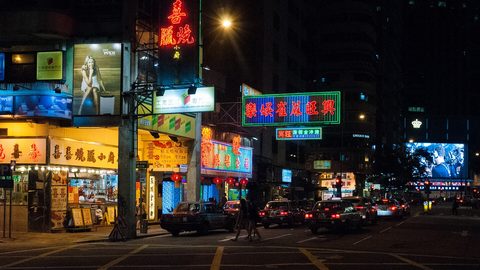
 Hong Kong for a Short Stay The Harbour the Sides and the Seasons
Plan a Hong Kong short stay with the minimum four-day framework, covering harbour contrasts, a market, a hike, and the seasonal timing that makes or breaks a trip.
Hong Kong for a Short Stay The Harbour the Sides and the Seasons
Plan a Hong Kong short stay with the minimum four-day framework, covering harbour contrasts, a market, a hike, and the seasonal timing that makes or breaks a trip.
-
 Is a Hong Kong Harbour View Room Worth the Extra Money
Calculate the real cost difference for a Victoria Harbour view room in Hong Kong and decide when the premium is justified and when the Star Ferry does it better.
Is a Hong Kong Harbour View Room Worth the Extra Money
Calculate the real cost difference for a Victoria Harbour view room in Hong Kong and decide when the premium is justified and when the Star Ferry does it better.
-
 Hong Kong Island or Kowloon Hotel Why the Choice Matters Less Than You Think
The Island-or-Kowloon hotel decision matters less than the MTR makes it seem, except when a taxi driver refuses the cross-harbour trip at 4pm.
Hong Kong Island or Kowloon Hotel Why the Choice Matters Less Than You Think
The Island-or-Kowloon hotel decision matters less than the MTR makes it seem, except when a taxi driver refuses the cross-harbour trip at 4pm.
-
 Sleeping at HKG Airport Hotels Tung Chung and the Transit Options
Compare the airside Regal Airport Hotel at HKG, the Tung Chung cluster, and Airport Express corridor stays for late arrivals and early departures.
Sleeping at HKG Airport Hotels Tung Chung and the Transit Options
Compare the airside Regal Airport Hotel at HKG, the Tung Chung cluster, and Airport Express corridor stays for late arrivals and early departures.
-
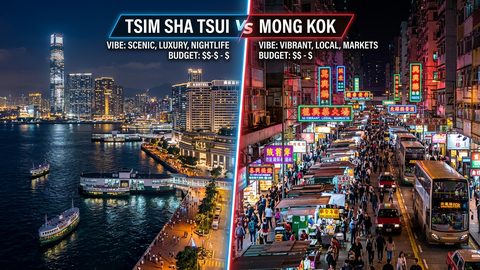 Tsim Sha Tsui vs Mong Kok — Choosing Your Kowloon Base by Budget and Vibe
TST or Mong Kok for your Kowloon base? Compare nightly rates, MTR exits, noise levels, and street vibe to pick the right fit for your Hong Kong trip.
Tsim Sha Tsui vs Mong Kok — Choosing Your Kowloon Base by Budget and Vibe
TST or Mong Kok for your Kowloon base? Compare nightly rates, MTR exits, noise levels, and street vibe to pick the right fit for your Hong Kong trip.